


Allergic Rhinitis (Hay Fever)
Nasal Allergy Symptoms and Treatment Approaches
Allergic rhinitis is a common cause of sneezing and nasal blockage, affecting millions of people worldwide:
In Singapore, around 13.1% of the population experience this condition, with higher rates seen in children due to ongoing exposure to indoor allergens.
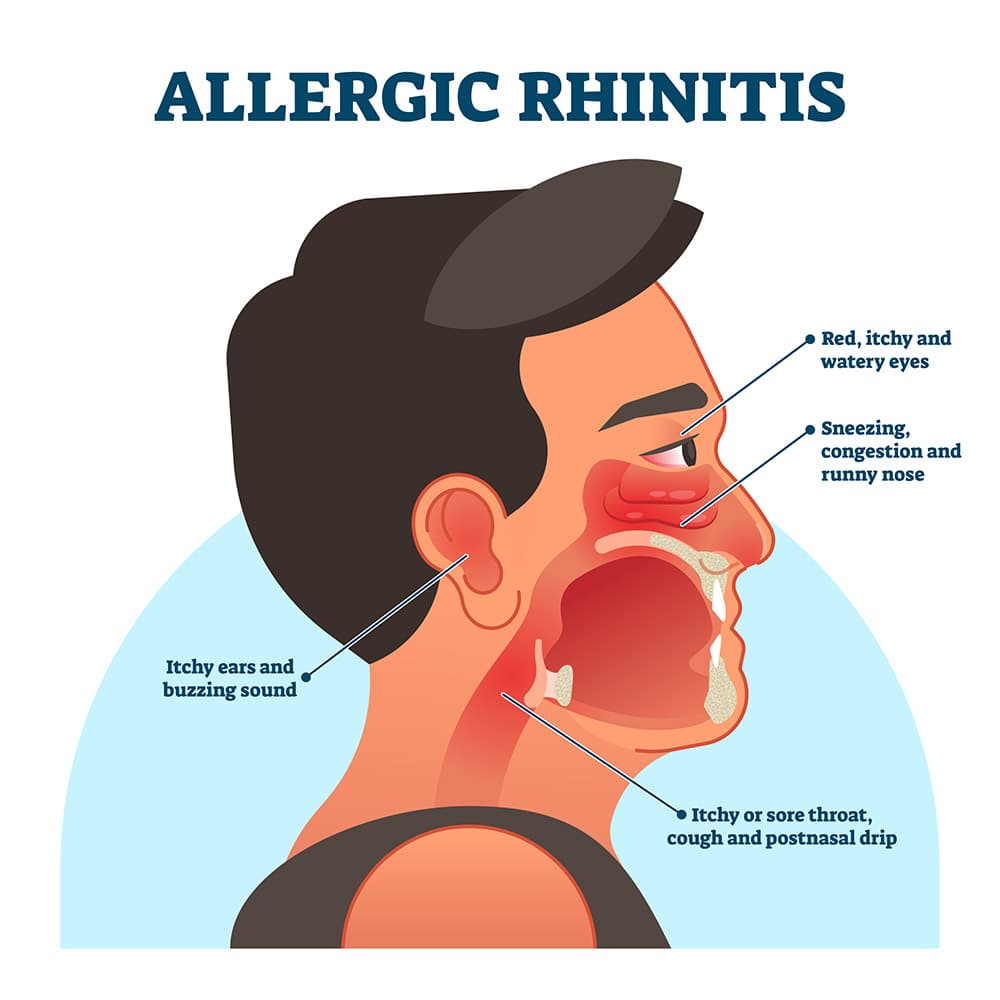
Often referred to as “hay fever”, allergic rhinitis is now understood to be an immune-mediated inflammation of the nasal lining, triggered by airborne allergens such as house dust mites, pollen or mould. Exposure can lead to sneezing, nasal congestion, a runny nose, and itchy or watery eyes.
For some individuals, symptoms may be persistent and affect daily comfort, concentration and sleep quality. When symptoms are ongoing or disruptive, an ENT specialist assessment can help clarify the diagnosis and guide appropriate management.
What is allergic rhinitis?
Allergic rhinitis is an inflammatory condition of the nasal lining (nasal mucosa) caused by exposure to allergens such as dust mites, pollen, mould or animal dander.
When these allergens are inhaled, the immune system releases inflammatory mediators, including histamine, leading to swelling, irritation and increased mucus production in the nose.
Unlike infections, allergic rhinitis is not contagious.
However, if left unmanaged, ongoing inflammation can contribute to complications such as chronic nasal blockage, disturbed sleep, reduced sense of smell and an increased risk of sinusitis or middle ear problems.
If symptoms are persistent or affecting your quality of life, a specialist evaluation may be helpful.
What triggers allergic rhinitis?
Allergic rhinitis occurs when the immune system overreacts to airborne allergens that come into contact with the nasal lining, leading to inflammation of the nasal passages and allergy symptoms.
Common triggers include indoor allergens such as house dust mites and animal dander, which are frequently encountered in enclosed or air-conditioned environments. Outdoor allergens, including pollen, may also contribute, particularly in individuals with seasonal symptom patterns.
Certain environmental irritants can further aggravate nasal inflammation. Poor air quality, haze, cigarette smoke and traffic-related pollutants may worsen symptoms despite not being true allergens. Sudden temperature changes or prolonged exposure to air-conditioning can also intensify nasal discomfort.
Allergic rhinitis may coexist with other allergic conditions, especially in children. Identifying and reducing exposure to relevant airborne allergens plays an important role in improving symptom control and reducing flare-ups over time.

Symptoms of allergic rhinitis
Symptoms of allergic rhinitis can vary in severity and may fluctuate depending on allergen exposure. While some people experience mild, occasional discomfort, others may have persistent symptoms that interfere with daily activities, concentration and sleep.
Symptoms primarily affect the nose and eyes, but ongoing nasal inflammation can also contribute to fatigue and a general feeling of unwellness.
In children, symptoms may be less obvious and sometimes mistaken for frequent colds.
Frequent sneezing, often occurring in bouts, especially in the morning | Nasal congestion or blockage, which may alternate between the sides of the nose | Clear, watery nasal discharge, unlike the thick mucus seen in infections |
Itchy nose, eyes or throat, commonly triggered after allergen exposure | Post-nasal drip, causing a sensation of mucus at the back of the throat | Disturbed sleep or daytime fatigue, due to ongoing nasal blockage |
If symptoms persist, recur, or affect sleep quality or daily function, further assessment can help determine whether allergic rhinitis or another nasal condition is contributing.

Dr. Ong Yew Kwang
Senior Consultant ENT Specialist & Rhinologist
Dr Ong Yew Kwang is an experienced ENT specialist with over 20 years of clinical practice. He graduated with honours from Trinity College, University of Dublin and completed ENT specialist training in 2008, earning the gold medal in the national exit examination. He later undertook subspecialty fellowship training in Rhinology and Endoscopic Skull Base Surgery at the University of Pittsburgh Medical Center, USA.
Before entering private practice, Dr Ong served as Senior Consultant and Director of Clinical Service at the National University Hospital (NUH), where he co-led the endoscopic skull base programme. He also holds a Master of Medicine in Sleep Medicine and a Post-Graduate Certificate in Allergy.
Types of allergic rhinitis
Allergic rhinitis can be classified based on how often symptoms occur and what triggers them. Understanding the pattern of symptoms helps guide treatment choices and long-term management.
Seasonal allergic rhinitis
Seasonal allergic rhinitis occurs when symptoms are triggered by outdoor allergens, most commonly pollen from trees, grasses or weeds. Symptoms tend to flare up during specific times of the year and may improve when pollen levels are lower. Individuals often notice worsening sneezing, nasal congestion and itchy eyes during peak pollen periods.
Perennial allergic rhinitis
Year-round symptoms characterise perennial allergic rhinitis. It is commonly caused by indoor airborne allergens such as house dust mites, mould or pet dander.
In Singapore, where exposure to dust mites is continuous due to humidity and indoor living, this form of allergic rhinitis is particularly common. Symptoms may be persistent and fluctuate in severity rather than fully resolving.
Occupational allergic rhinitis
This form of allergic rhinitis is related to workplace exposure. Certain occupations involve repeated contact with airborne substances such as chemicals, flour dust, latex or laboratory allergens.
Symptoms often improve away from work and return with re-exposure, making early recognition important.
Some individuals may experience features of more than one type. A proper assessment can help identify the dominant triggers and guide a more targeted approach to management.
Diagnosis and tests
Diagnosis of allergic rhinitis begins with a clinical consultation and nasal examination. Your doctor will review your symptoms, their duration and pattern, as well as any known triggers at home, work or school.
A personal or family history of allergic conditions may also be relevant.
Examination of the nasal passages may reveal signs of allergic inflammation, such as swelling of the nasal lining or enlarged turbinates. These findings help distinguish allergic rhinitis from infections or structural nasal conditions.
Further tests may be recommended where appropriate:
- Nasal endoscopy
A thin, flexible camera is used to examine the nasal cavity in greater detail. This allows assessment of inflammation, turbinate enlargement or nasal polyps, and helps exclude other causes of nasal blockage. - Allergy testing
Skin prick tests or blood tests may be used to identify specific airborne allergens and support targeted management.
Imaging tests are not routinely required, but may be considered if symptoms persist or if sinus involvement is suspected.
Accurate diagnosis allows treatment to be better tailored and helps avoid unnecessary long-term medication use.
Managing and treating allergic rhinitis
Treatment for allergic rhinitis focuses on reducing nasal inflammation, relieving symptoms and minimising exposure to triggers. Management is tailored according to symptom severity, frequency and how much daily activities or sleep are affected.
Medical treatment
For most patients, symptoms can be effectively managed with medication. Common options include:
- Intranasal steroid sprays, which help reduce inflammation in the nasal lining and improve congestion over time
- Antihistamines, used to relieve sneezing, itching and a runny nose
- Saline nasal rinses, which help flush out allergens and reduce nasal irritation
Regular and correct use of nasal sprays is important for optimal symptom control.
Allergy-directed management
Where specific triggers are identified, allergen avoidance measures form an important part of long-term management. In selected patients with persistent symptoms despite medication, allergen immunotherapy may be considered to reduce sensitivity over time.
Procedural options (selected cases)
In patients with ongoing nasal blockage due to enlarged turbinates that do not respond adequately to medication, turbinate reduction procedures may be considered to improve nasal airflow. These are typically minimally invasive and aimed at relieving obstruction while preserving nasal function.
Management is guided by symptom severity and response to treatment.
When to see an ENT specialist

If your sinus symptoms persist, keep recurring or are no longer responding to usual treatment, it may be time to consult an ENT specialist:
In some cases, the problem may be linked to structural issues like a deviated septum, nasal polyps or ongoing inflammation that requires more targeted care.
Without proper treatment, sinusitis can occasionally lead to more serious complications, including infections spreading to the eyes or, rarely, the brain.
Chronic inflammation may also result in lasting loss of smell (Anosmia) or the growth of nasal polyps that further block drainage.
An ENT evaluation can help identify the root cause of your symptoms and offer a long-term solution, whether through medication or advanced procedures if needed.
If you’ve been struggling with persistent or recurrent sinus issues, we’re here to help you breathe and feel better again.
Patient Information
What is the difference between allergic rhinitis and a common cold?
Is allergic rhinitis the same as sinusitis?
No. Allergic rhinitis involves inflammation of the nasal lining due to allergens, while sinusitis affects the sinus cavities and is often related to infection or blockage. Poorly controlled allergic rhinitis can increase the risk of developing sinusitis.