

Turbinate Reduction Procedures
Treatment for Persistent Nasal Blockage Due to Enlarged Turbinates
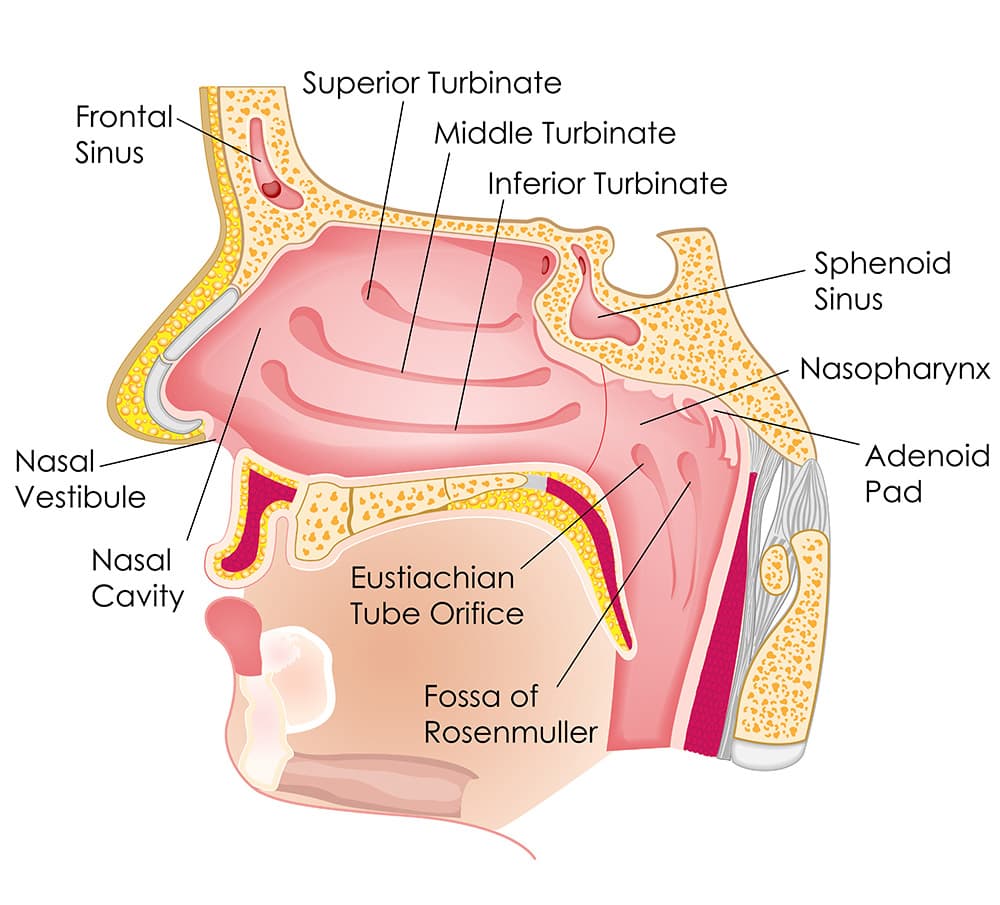
The nasal turbinates are delicate structures inside the nose that warm, humidify and filter the air you breathe. When these structures become persistently swollen, most often due to chronic inflammation, they can narrow the nasal passages and cause ongoing congestion.
For patients whose symptoms do not respond adequately to medication, turbinate reduction procedures may be considered to decrease the size of the turbinates while preserving their essential function.
What is turbinate reduction?
Turbinate reduction is a procedure that uses minimally invasive techniques to shrink swollen nasal turbinates (turbinate hypertrophy) and relieve chronic nasal blockage.
Procedures such as radiofrequency ablation, coblation and microdebrider-assisted turbinoplasty are considered when symptoms persist despite appropriate medical treatment.
The aim is to reduce excess tissue while preserving the turbinates’ natural filtering and humidifying function.
Most procedures are performed as day surgery with a relatively short recovery period. Improvement in nasal airflow and sleep may occur for many patients, although outcomes depend on the technique used and individual anatomy.
An ENT specialist will advise whether turbinate reduction is appropriate based on your nasal structure, symptom severity and response to previous treatments.

Dr. Ong Yew Kwang
Senior Consultant ENT Specialist & Rhinologist
Dr Ong Yew Kwang is an experienced ENT specialist with over 20 years of clinical practice. He graduated with honours from Trinity College, University of Dublin and completed ENT specialist training in 2008, earning the gold medal in the national exit examination. He later undertook subspecialty fellowship training in Rhinology and Endoscopic Skull Base Surgery at the University of Pittsburgh Medical Center, USA.
Before entering private practice, Dr Ong served as Senior Consultant and Director of Clinical Service at the National University Hospital (NUH), where he co-led the endoscopic skull base programme. He also holds a Master of Medicine in Sleep Medicine and a Post-Graduate Certificate in Allergy.
Dr. Ong Yew Kwang
Senior Consultant ENT Specialist & Rhinologist
Dr Ong Yew Kwang is an experienced ENT specialist with over 20 years of clinical practice. He graduated with honours from Trinity College, University of Dublin and completed ENT specialist training in 2008, earning the gold medal in the national exit examination. He later undertook subspecialty fellowship training in Rhinology and Endoscopic Skull Base Surgery at the University of Pittsburgh Medical Center, USA.
Before entering private practice, Dr Ong served as Senior Consultant and Director of Clinical Service at the National University Hospital (NUH), where he co-led the endoscopic skull base programme. He also holds a Master of Medicine in Sleep Medicine and a Post-Graduate Certificate in Allergy.
Why are turbinate reduction procedures performed?
Chronic or recurrent turbinate swelling can lead to a constant blocked or stuffy nose, mouth breathing, snoring and disturbed sleep.
Procedures are usually reserved for patients who have tried conservative measures (saline rinses, intranasal steroids and treatment of allergies) but continue to experience significant symptoms.
The goals of treatment are to:
- Improve nasal airflow and breathing comfort. By reducing excessive tissue or the shrinkage of inflamed mucosa, the airway can be opened up, relieving obstruction.
- Maintain the natural function of the turbinates. Modern techniques are designed to shrink enlarged soft tissue while protecting the bony framework and mucosa, which humidify and filter air.
- Alleviate snoring and improve sleep quality. Nasal obstruction from turbinate hypertrophy can contribute to mouth breathing and snoring; reducing turbinates may improve sleep for some patients.
Types of turbinate reduction procedures
There are several turbinate reduction procedures available. The most appropriate option depends on the severity of symptoms, nasal anatomy and whether other nasal issues (such as a deviated septum or sinus disease) are present:
Radiofrequency ablation (RFA)
Summary A non‑surgical clinic‑based procedure that uses controlled radiofrequency energy to gently shrink tissue with minimal bleeding. | Potential advantages and considerations Minimally invasive, typically performed in clinic; less bleeding and discomfort; may be suitable for patients with mild‑to‑moderate hypertrophy. |
Cauterisation or submucosal diathermy
Summary Heat‑based method to gently shrink swollen tissue; it’s quick with little downtime, though results may not last as long as newer approaches. | Potential advantages and considerations Short procedure time and low cost, but may require repeat treatments. Temporary crusting or nosebleeds can occur during healing. |
Coblation (plasma ablation)
Summary Employs cool plasma energy to dissolve excess tissue precisely and gently; may offer better comfort than older heat‑based methods. | Potential advantages and considerations Precise tissue removal with minimal heat injury; quick recovery; may reduce postoperative discomfort; some patients may experience temporary crusting. |
Microdebrider‑assisted turbinoplasty
Summary Uses a small rotating instrument to mechanically remove excess tissue; results tend to be long‑lasting, though the procedure is more invasive and recovery time is longer. | Potential advantages and considerations Allows precise sculpting of the turbinate and typically provides durable results; often performed under general anaesthesia. |
Quantum molecular resonance (QMR) turbinoplasty
Summary Applies non‑thermal energy to gently reduce tissue size; early reports suggest fewer complications compared with microdebrider surgery. | Potential advantages and considerations Short operative time; minimal bleeding; may be ideal for patients seeking faster recovery; availability may be limited in some centres. |
Partial or total inferior turbinectomy
Summary Partial inferior turbinectomy involves surgical removal of part of the inferior turbinate in selected severe cases. This can provide substantial and lasting improvement in nasal airflow when enlargement is pronounced and other treatments have not provided sufficient relief. | Potential advantages and considerations Can significantly improve nasal airflow and patient satisfaction in severe or refractory cases. As more tissue is removed, there is a higher risk of dryness and rare complications, so careful specialist selection is important. |
Considering turbinate reduction in Singapore

In Singapore’s warm, humid climate, nasal symptoms may fluctuate with air-conditioning, haze exposure or environmental irritants. Persistent turbinate hypertrophy can therefore be particularly troublesome for some individuals.
If you continue to experience long-standing nasal blockage despite appropriate medical therapy, a consultation with an ENT specialist can help determine whether turbinate reduction treatment may be suitable for you.
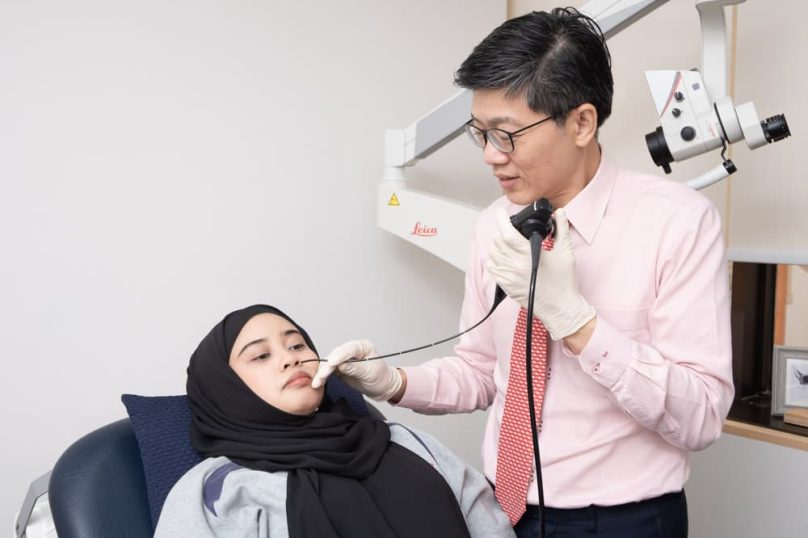
A structured evaluation, including a detailed history and nasal endoscopy, allows treatment to be tailored to your specific anatomy and symptom pattern.